Tuesday, October 14, 2008
Complete

Monday, October 13, 2008
Artist of the Week
Trinh T. Minh-ha is a filmmaker, writer, academic and composer. She is a world-renowned independent filmmaker and feminist, post-colonial theorist. She teaches courses that focuses on women's work as related to cultural politics, post-coloniality, contemporary critical theory and the arts. The seminars she offers focus on Third cinema, film theory and aesthetics, the voice in cinema, the autobiographical voice, critical theory and research, cultural politics and feminist theory.
She has been making films for over twenty years and may be best known for her first film Reassemblage, made in 1982. She has received several awards and grants, including the American Film Institute’s National Independent Filmmaker Maya Deren Award, and Fellowships from the John Simon Guggenheim Foundation, the National Endowment for the Arts and the California Arts Council. Her films have been the subject of twenty retrospectives.
-wikipedia
Interview with Artist
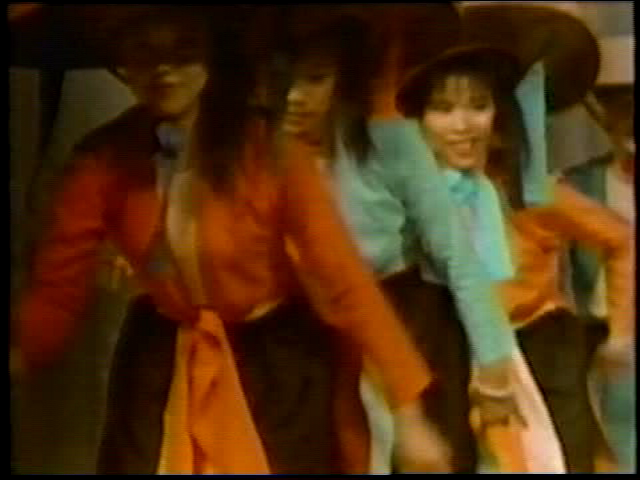
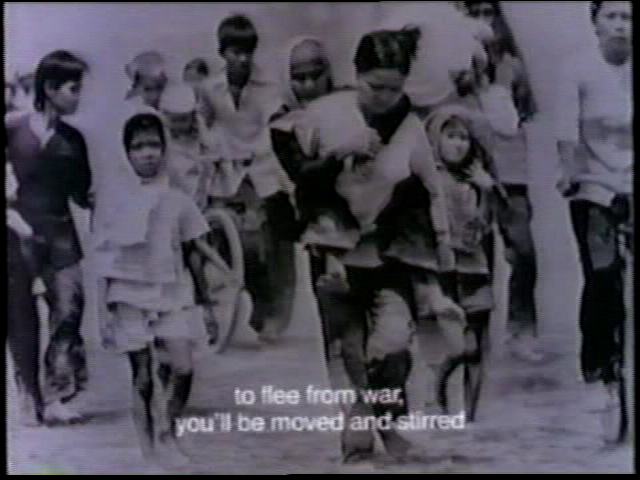
Surname Viet Given Name Nam (1989)

Artist Website
Friday, October 10, 2008
Week in Review
- Did anyone critique your work this week? If so, what were their impressions?
No critiques, just conversation. I’m in an in between spot with the work right now.
- What was the most motivational or creative moment of the past week?
Meeting with Sonali, brainstorming where to take the work. The idea that I can’t document not wanting to make work as work itself.
- What do you want to achieve in next week's studio practice?
Have some of this new diary footage shot. Figure out how to get AVCHD to edit properly in Premiere or Final Cut or anything.
- What did you achieve in your studio this past week?
Not much, I went through footage shot the week before and found a few gems that I made note of.
- What has been an artistic failure this week?
Freezing up, trying to avoid getting sick, but at the same time being worn down.
- What was the most profound thought in relation to your practice this week?
This is my thesis work.
Monday, October 6, 2008
Complete
Sunday, October 5, 2008
Artist of the Week
Morris was born in Hewlett, New York on February 5, 1948 and is an American Academy Award winning documentary film director. He received a B.A. in History from the University of Wisconsin-Madison in 1969. Morris has received three fellowships from the National Endowment for the Arts, a Guggenheim Fellowship and a MacArthur Fellowship. He is a graduate of the University of Wisconsin-Madison and was a graduate student at Princeton University and the University of California-Berkeley. Morris' work received a full retrospective in November 1999 at the Museum of Modern Art in 1999 and he was given a special tribute at the Sundance Film Festival in 2001.
Fog of War
Errol Morris Blog at NYT
Errol Morris website
Thursday, October 2, 2008
Week in Review
- Did anyone critique your work this week? If so, what were their impressions?
No critiques this week. This was more of a work week.
- What was the most motivational or creative moment of the past week?
It’s starting to feel good to leave the camera on. I think I’m starting to get some good footage.
- What do you want to achieve in next week's studio practice?
I want to grab the clips I’m attracted to from the pile of footage I’ve shot these past weeks, throw it on a timeline and start playing around with it.
- What did you achieve in your studio this past week?
I captured footage from a trip to Ohio, I’ve started to move it to the computer and sort through everything.
- What has been an artistic failure this week?
Haven’t shot as much as I wanted to, I’ve been too tired when I get home at night to take the camera out.
- What was the most profound thought in relation to your practice this week?
This is going to be a long process, but if I create this piece right, it could be the best work I’ve created so far.
Lamp
Wednesday, October 1, 2008
Artist Statement (100 words)
The camera is an excellent tool that can be used to document events in life. But what is the camera doing to the person using it? Buffers are placed between the artist and the subject, power is dramatically shifted from the viewed to the viewer. How can I truly document this event in both Claire’s life as well as my own without documenting me? Turning the camera on me shows all the hidden details of the event left out; my struggle with the disease, my love for Claire, my frustration with the ongoing artistic process. This is a true documentation.